Using the で Particle to Mark Cause or Reason
Earlier today, I was watching a GameGengo video focused on the Genki I textbook. I’ve decided to take another look at grammar since it’s my weakest point, though I feel confident about the first few grammar points. While watching the section on で, I went back through my Anki cards to check whether they all still made sense.
I was familiar with the two uses of で explained in the video:
Place of action 学校で勉強する — study at school
Tool / means (the thing used to carry out the action)
少年は網でその蝶を捕まえた。 The boy caught the butterfly with a net.
So far, so good.
Then I ran into the following Anki card:
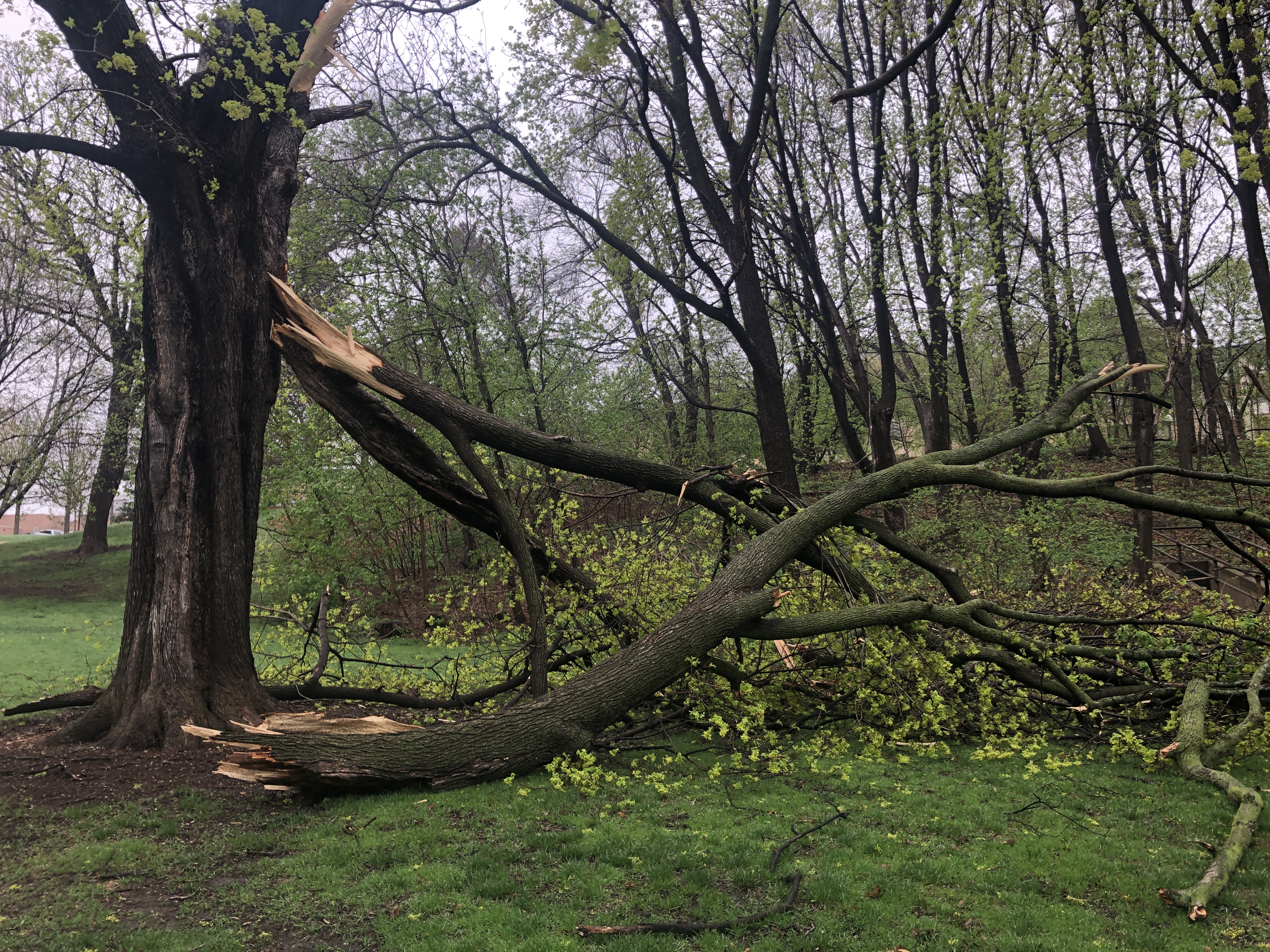
台風で木が倒れた。 “A tree fell because of a typhoon.”
A typhoon is neither a place nor a tool, so why で?
After some Googling, I found an explanation: で can mark the circumstance or cause under which something happens. This usage usually applies to events, natural causes, or unavoidable situations.
And then I found another example in my Anki cards:
釘を踏んで怪我をしました。 “I injured myself by stepping on a nail.”
Tags: japanese
Sentence Mining Spam Messages
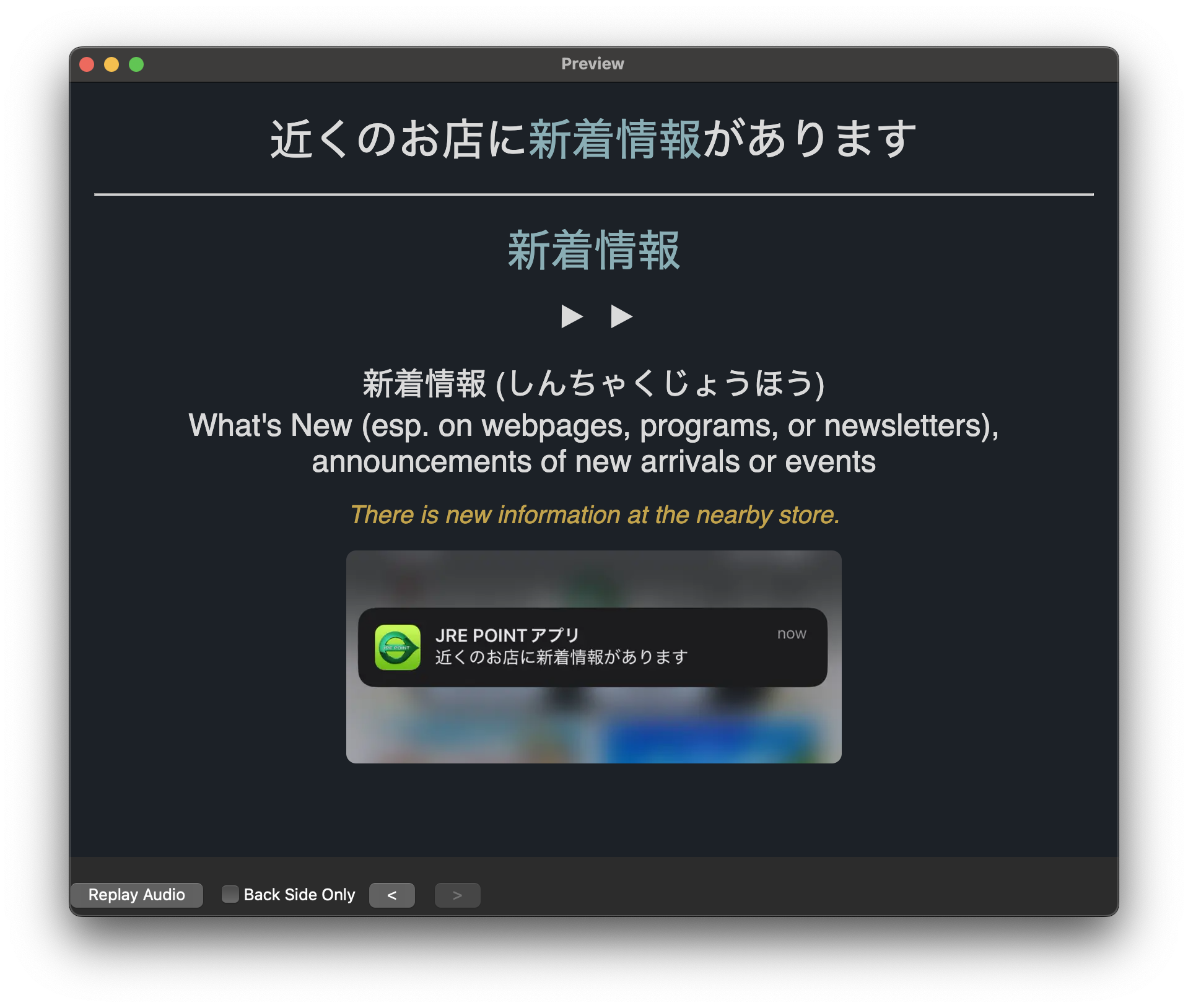
A few days ago, I signed up for the JRE Card, which is a point card linked to my Suica travel card. Basically, I can earn points at most shops around the station by purchasing things like coffee. These points can then be used for travel discounts. I hastily set up the app and accidentally gave it permission to send all types of notifications—resulting in a constant stream of spam. However, rather than getting annoyed by it, I turned it into a little game: as soon as I fully understand the spam message, I allow myself to turn it off.
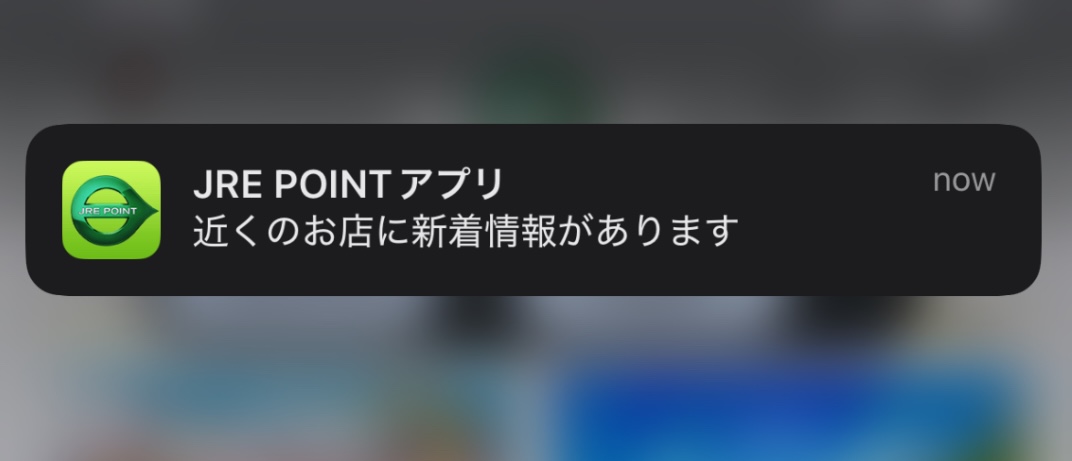 This spam message is perfect for sentence mining—it contains only one (compound) word I didn’t know yet: 新着情報.
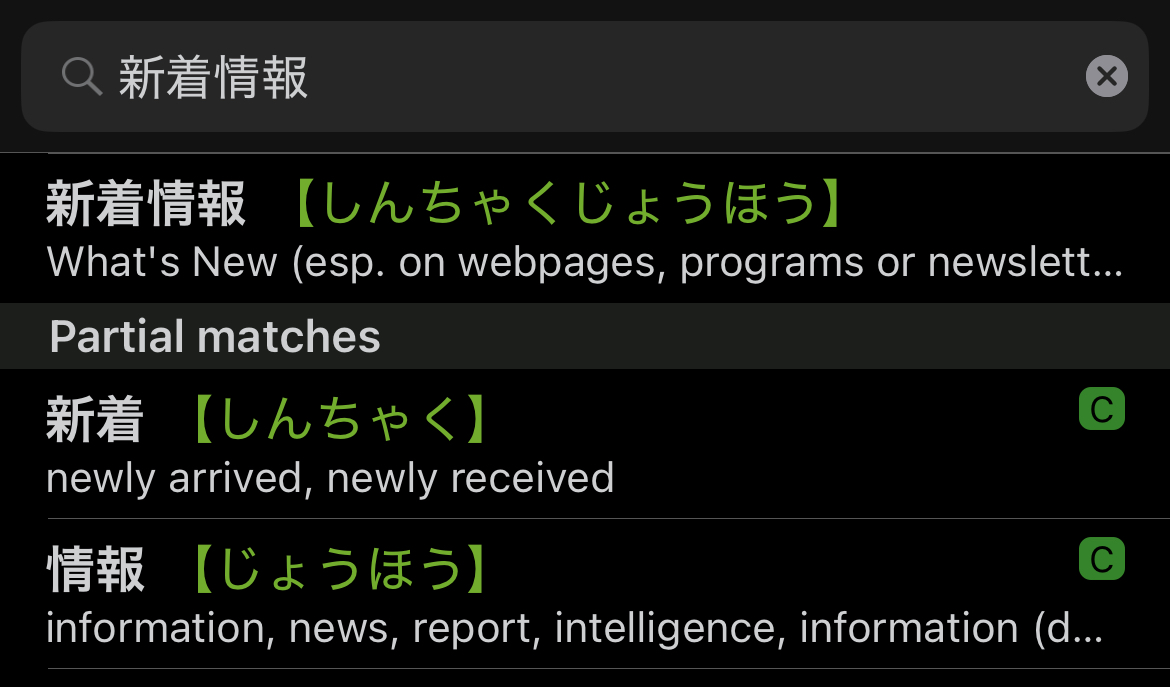 I use the app Shirabe Jisho on my iPhone to quickly look up words—either by taking a photo of the text, selecting the text in the image using Apple’s OCR and copying it into the app, or by drawing the kanji directly into the app.
It turns out these are two separate words (“newly” and “information”), but when used together as a compound, they mean something like “what’s new.” It’s commonly used on news websites and in apps.
Then, I create an Anki card that includes the sentence, target word, and additional details like audio for both the sentence and the word. While it’s possible to do this directly in Anki, I’ve found that Migaku’s card creator works great—it automatically generates the audio files.
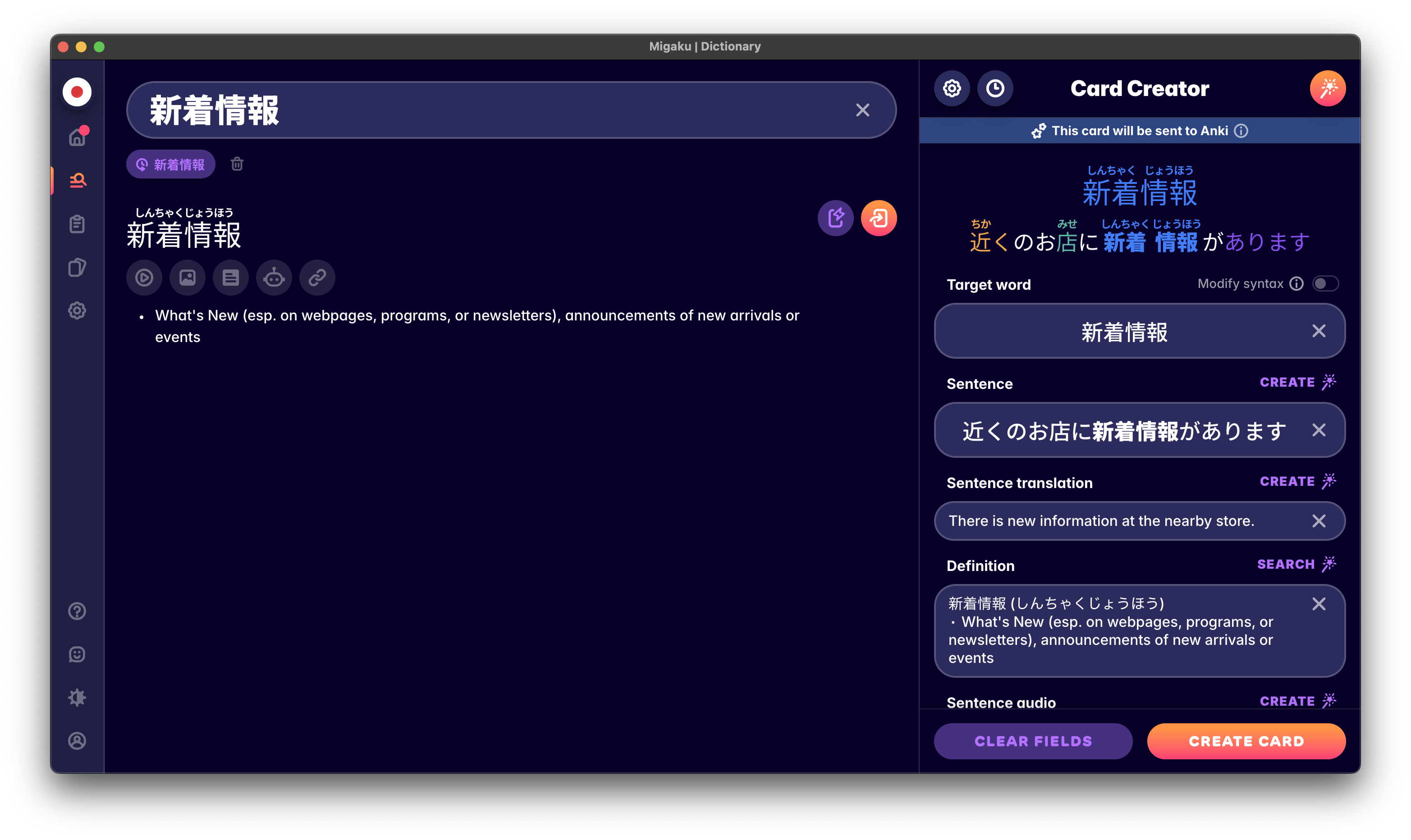
With a click of a button, the card is created and sent to Anki, where it becomes part of my learning routine.
Tags: japanese, sentence-mining
Learning conversational Japanese for (Coffee)bar
Continuing to learn conversational words and phrases for my morning coffee. Here’s today’s video I used.
Key takeaways:
ホットかアイス、どちらになさいますか?
Would you like it hot or iced?
〜になさいますか? = respectful way to ask “What will you choose?” / “What will you have?”お会計、500円で御座います。
That’ll be 500 yen.
で御座います: be, is- いえ、持ち帰りでお願いします。
No, I’ll take it to go.
持ち帰り (もちかえり): takeout (i.e. food), take-out, takeaway, take-away - いらっしゃいませ、店内ご利用ですか?
Welcome, will you be dining in?
店内 (てんない): inside of a shop
Tags: japanese
Picking up my first manga for immersion
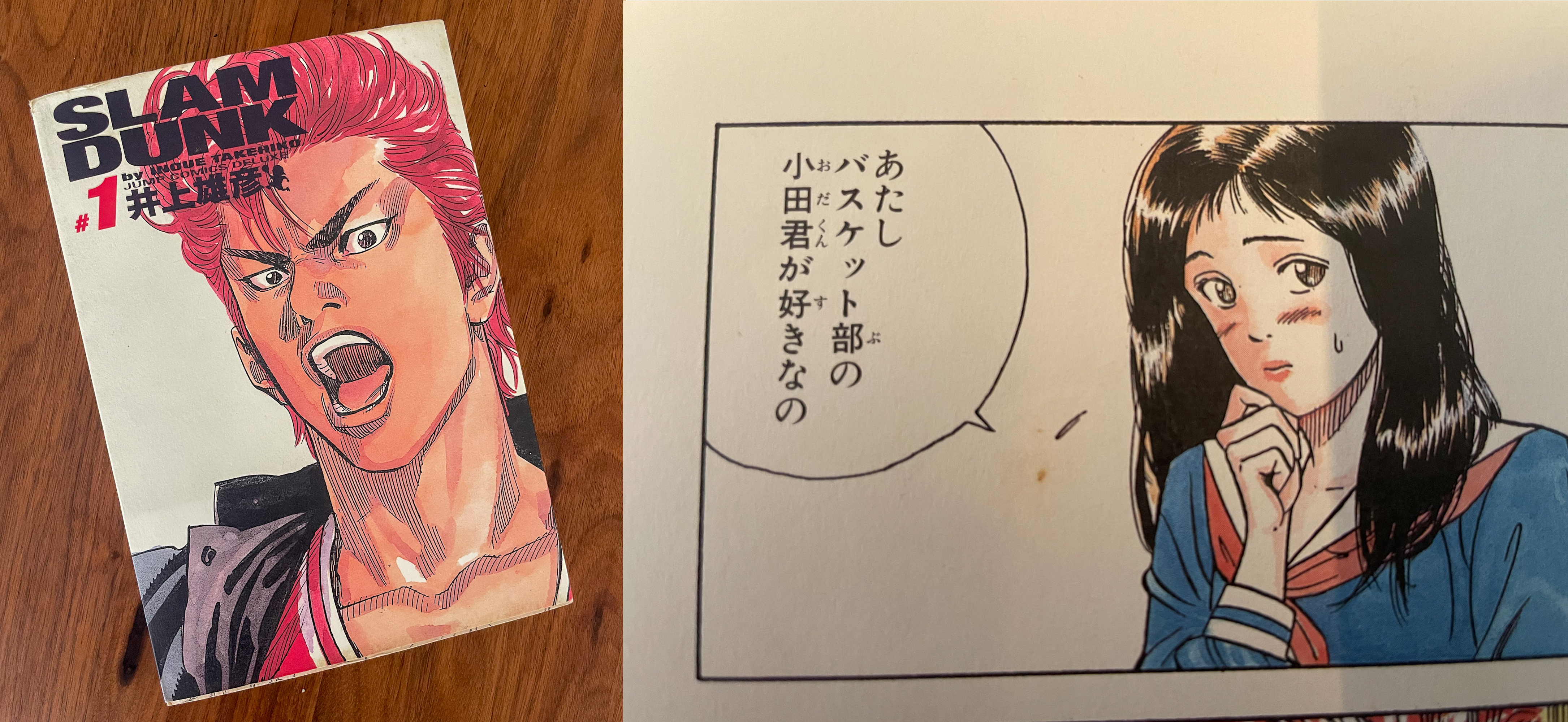
write about atashi and nano particle.
New words learned today:
- ねじ - screw
- クランプ - clamp
- 窓側 - window-side
- 引き上げる - pull up, salvage
- 値上がり - price rise
- 値上げ - price hike/raise
- 取り上げる - take up, confiscate
- 座席 - seat
Tags: japanese
Coffee Confusion at Tully’s
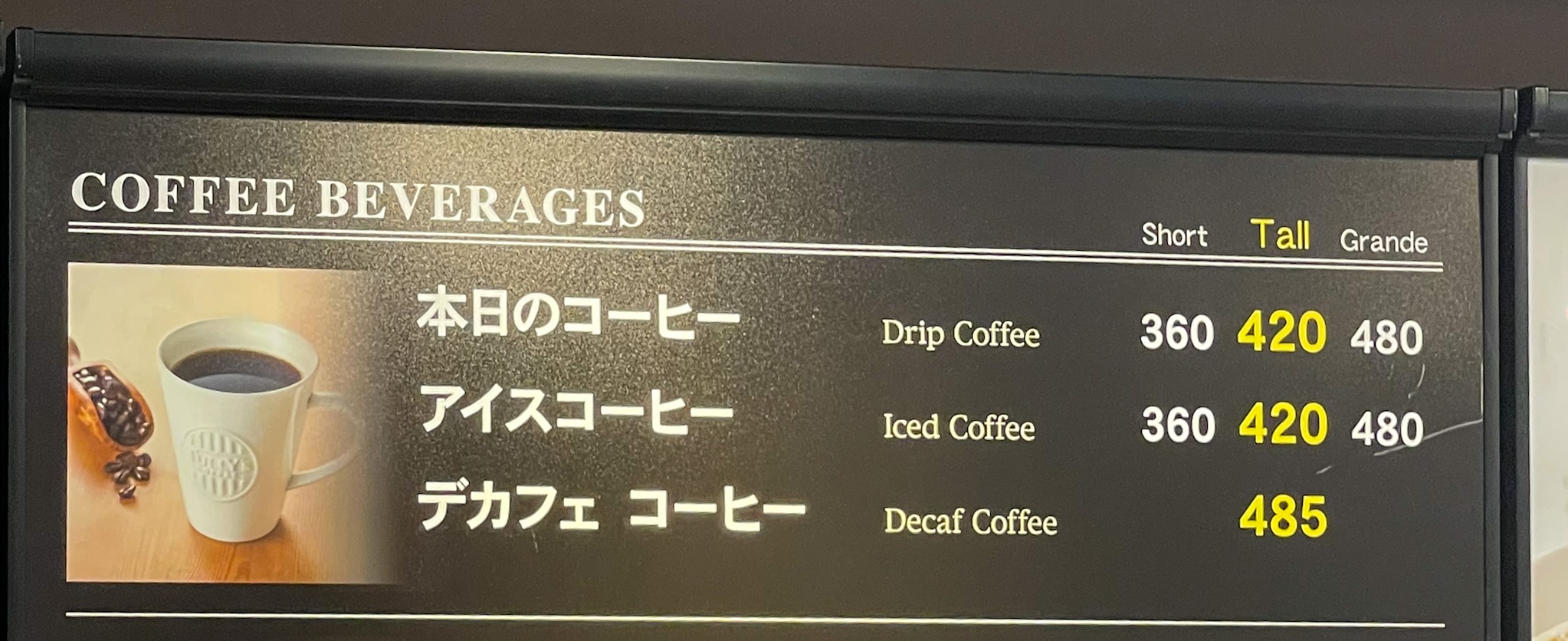
This morning, I decided to get regular coffee instead of my usual café latte at Tully’s. I was already a bit thrown off to learn that what they call “drip coffee” is just regular coffee that comes out of a machine—not hand-poured or anything fancy. But what really confused me was the Japanese menu, where “drip coffee” was labeled as 日本のコーヒー, which literally means “Japanese coffee.”
Not sure how to order, I tried saying “drippu kōhī” (ドリップコーヒー), and that worked just fine.
Out of curiosity, I looked up where this “Japanese coffee” label might come. Even ChatGPT doesn’t seem entirely sure why drip coffee was labeled that way in this case.

! UPDATE
As I was talking about this with my wife later today, she pointed out that the kanji 本日 in this case is read as honjitsu, meaning “today.” So 本日のコーヒー means “today’s coffee,” referring to the specific beans being used that day.
Since 本日 can also be read as Nihon (“Japan”), I had initially interpreted it as “Japanese coffee,” but honjitsu makes much more sense in this context. That said, it would still feel a bit odd to order “today’s coffee,” so you’d probably just say “hot coffee” or “drippu kōhī” (ドリップコーヒー) when ordering.
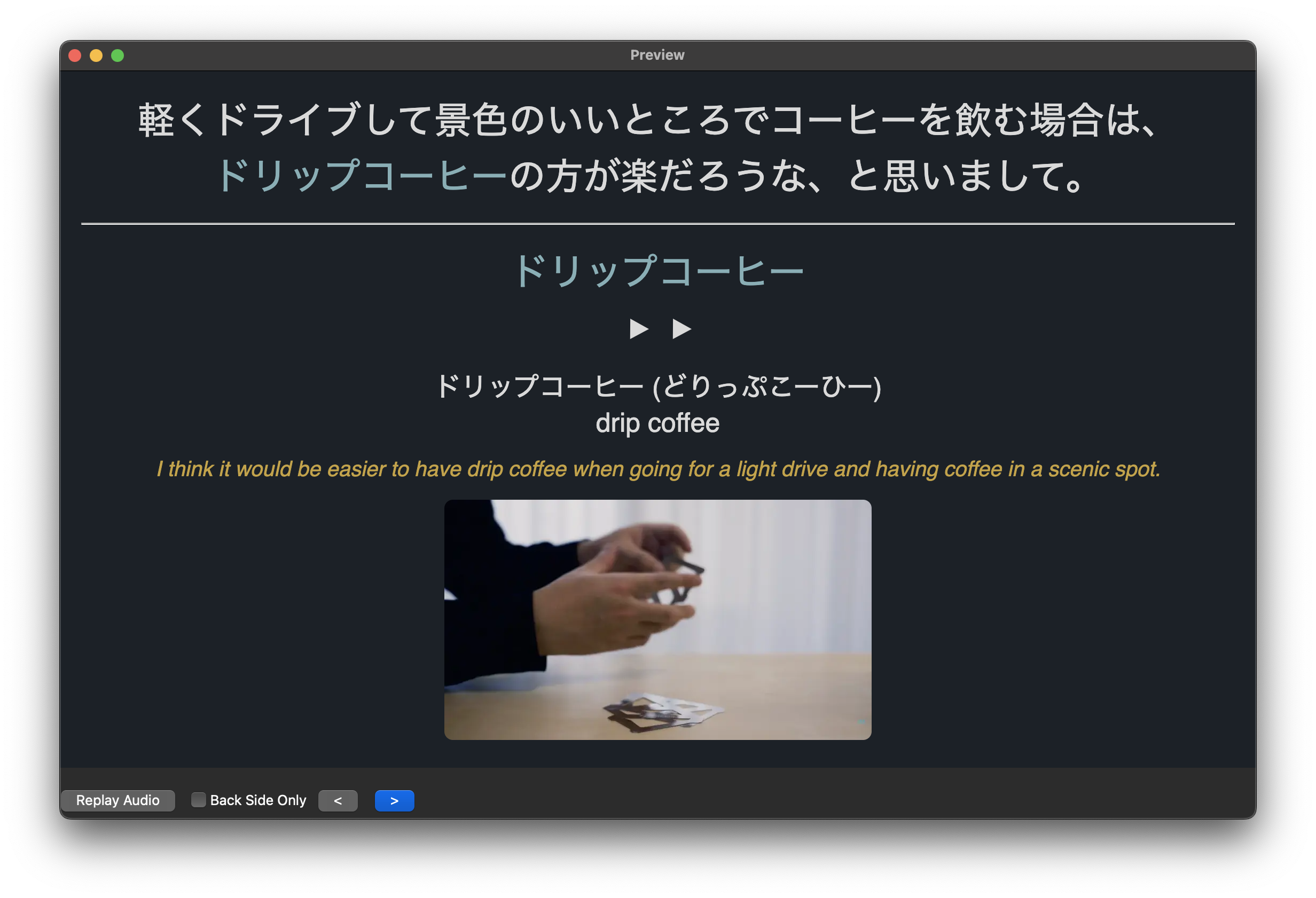 via: https://www.youtube.com/watch?v=VZ16eqDVk3c&t=45s
Tags: japanese, vocabulary, mining
Sentence Mining Within the Core 6K Deck
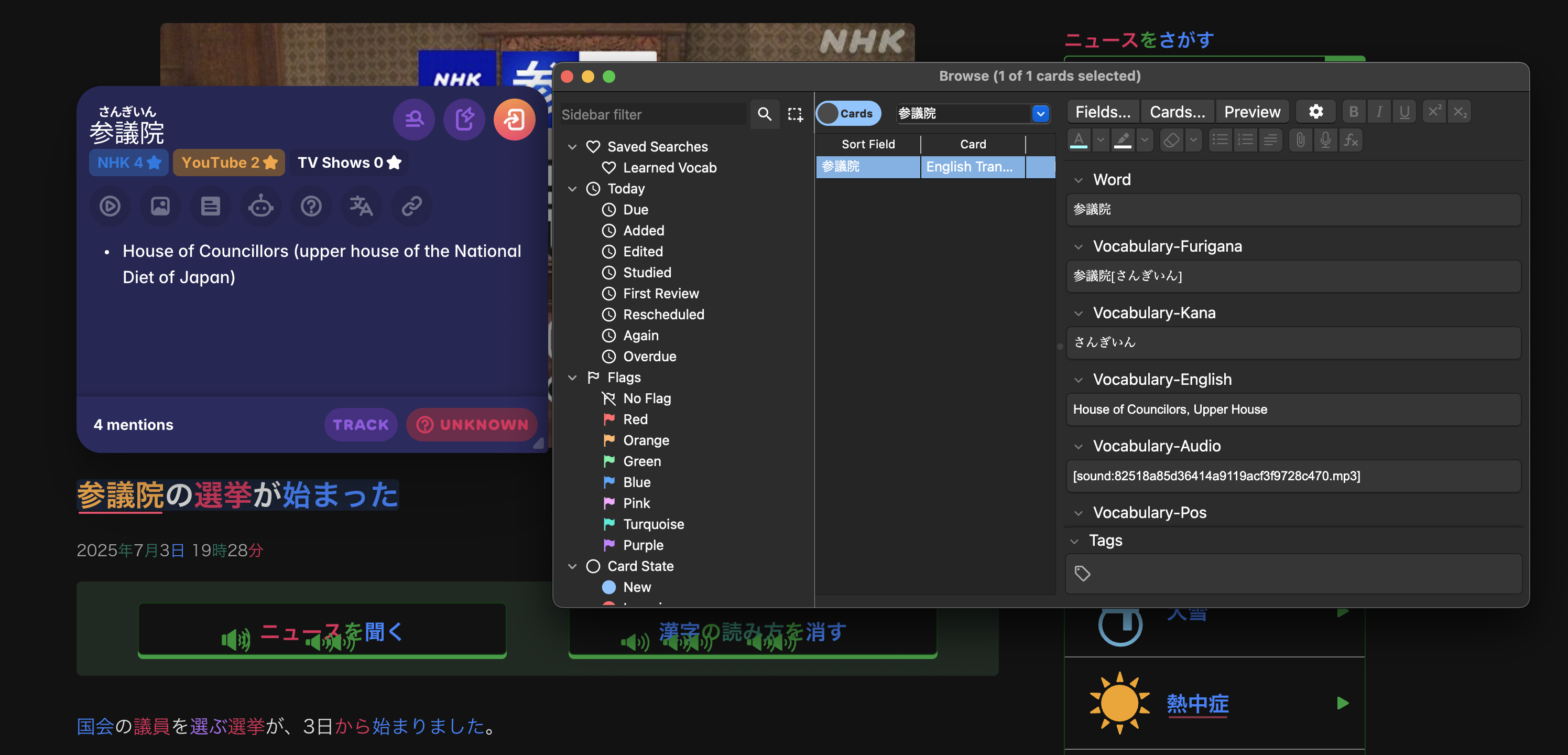
I’ve worked through about two-thirds of the Core 6k Anki deck so far. At some point, I got bored with it and shifted to sentence mining—mainly picking out new words from content I actually enjoy, like shows, articles, or YouTube videos.
But every now and then, especially while reading the NHK Easy website, I come across words that turn out to be from the unseen part of the Core 6k deck. Even though I haven’t officially studied those cards yet, I end up mining them naturally through immersion.
It’s a good reminder that sentence mining isn’t just for completely new words outside the deck. It can also overlap with words I would have eventually reached in Core6k—just in a way that feels much more alive and relevant.
Tags: japanese, sentence-mining
Realizing I Need Grammar
Not knowing much grammar is becoming a real problem—something I’ve been really noticing now that I’ve moved to Japan. I had hoped to pick it up naturally through immersion, but since I’ve spent most of my time reviewing and adding new vocabulary and kanji readings, I feel like I’m missing the glue that holds everything together. It’s frustrating that I can’t form meaningful sentences when talking to people I meet. Even though I know a large number of isolated words, I still struggle to put them together in a way that makes sense. Just the other day, I met the owner of the izakaya next door, and when he started asking me questions about just moving here, I broke out in a sweat—I couldn’t find a way to respond beyond a few awkward words and gestures. In a way, when it comes to actual communication, I don’t feel much more advanced than I was two years ago.
 img: slam dunk
Tags: japanese
Japanese with Tanaka-san and Creating New Flashcards for Familiar Vocabulary

I’ve been sentence mining some new vocabulary words today from the beginner-friendly YouTube channel Learn Japanese with Tanaka san and wanted to share it here as I think it’s a good channel. Right now I have about 80-90% word comprehension on most videos, which works well since I understand most of what is being said but am still picking up some new, high-frequency words.
What I’ve found useful is that I’m also encountering words I already know from my Anki deck, but seeing them used in natural contexts and different sentence patterns. It’s been helpful for reinforcing my understanding and picking up more nuanced usage that I might have missed when just learning the isolated vocabulary. It’s one thing to know a word’s definition, but seeing how it actually works in conversation makes a difference.
I’ve been creating new flashcards for these already known words with the sentences from the videos, and now I’m wondering if I should delete the original cards from my core 6k deck since the new context-based ones seem more useful.
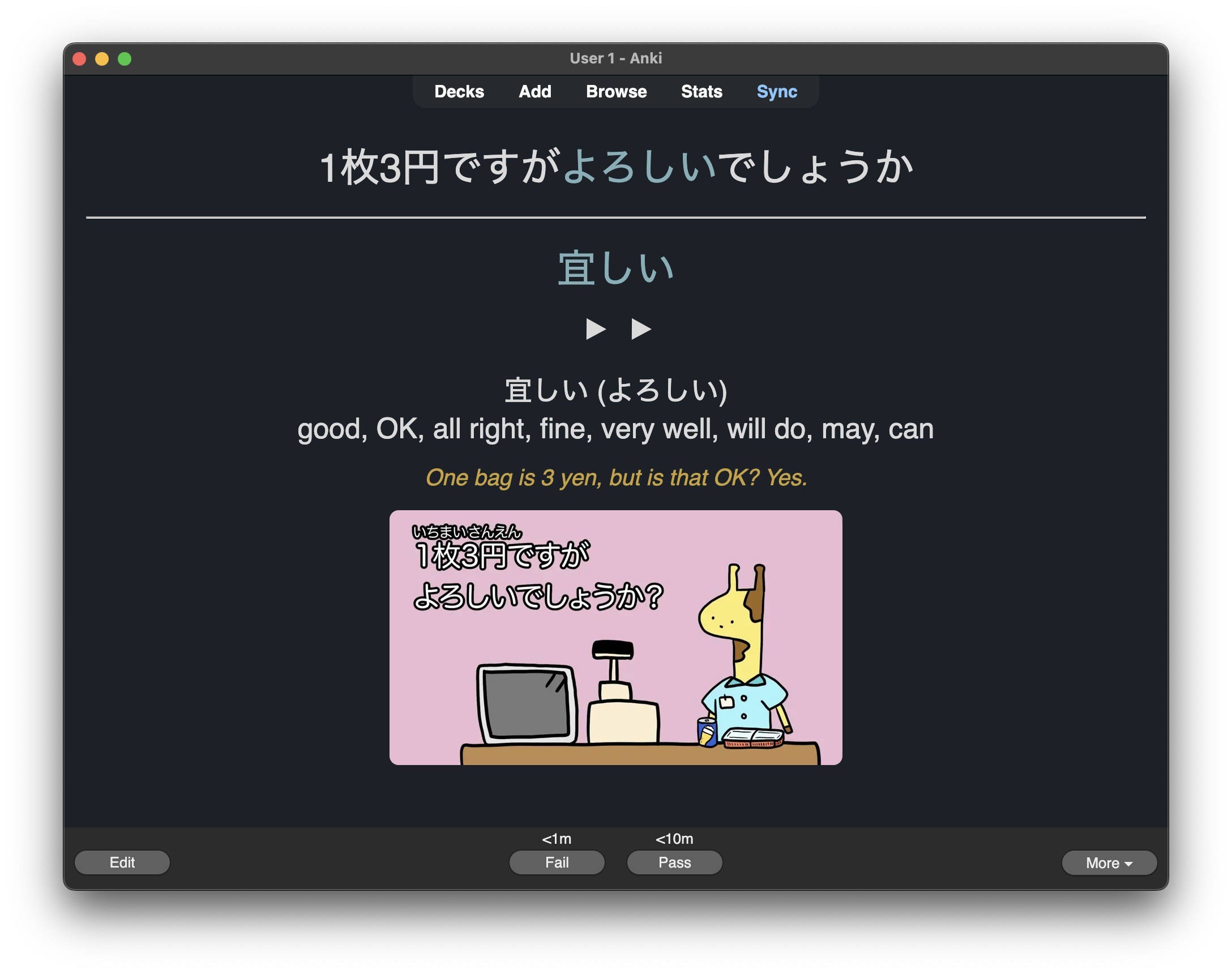 One of the cards I made today
Tags: japanese